As its wiki page implies, Highlight location can be used for other purposes than finding the mouse pointer:
The Highlight Location action highlights a location on screen. This can be specially useful for finding the mouse pointer.
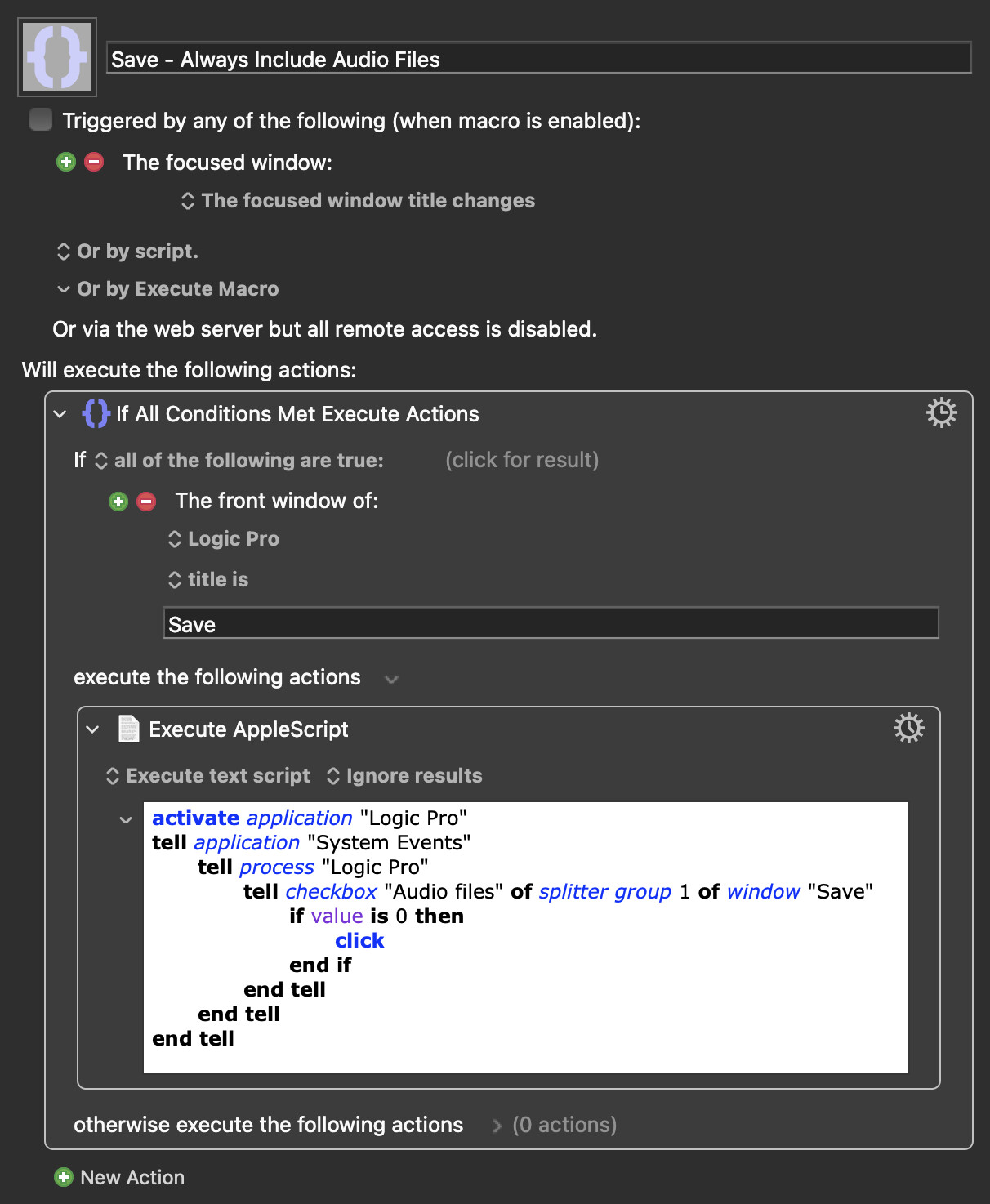
Here is an example that gives a visual reminder while saving in Apple’s Logic Pro audio software. If you don’t want to read all this (and I wouldn’t blame you; I didn’t want to write it all!) the key point is: you can use Highlight location to draw boxes (or ovals) around screen elements that you might want to be reminded of.
When saving a Logic Pro project, I always want it to include copies of audio files that have been imported, so that everything is safely gathered in one place. Upon loading a project, I don’t want any audio files to be missing due to, say having reorganised or weeded out files that might not even be on the same drive! My standard practice is to save copies of such files with the project—but Logic Pro does not always make that as easy as it should be.
There is no setting/preference that can be set such that audio files are always saved. The appropriate setting is shown in the Save dialog box and it is up to the user to make sure that that setting is checked.
Workarounds include saving a template that has the setting on, but I have found that to be unreliable at best and usually completely ineffective. Discussions in online forums suggest that one’s version of Logic Pro is just one of many possible factors that mean one should never assume that imported audio will be saved.
It would be quite possible to create a macro to fully automate the checking (in both senses) of the relevant box, if only by using image detection (if you have a better idea, feel free to share it, of course), but all I really needed was a visual reminder. That’s where Highlight location was useful.
This is just an extract from a macro, to serve as an illustration. The macro is part of a set of macros that depend on the trigger The focused window title changes.
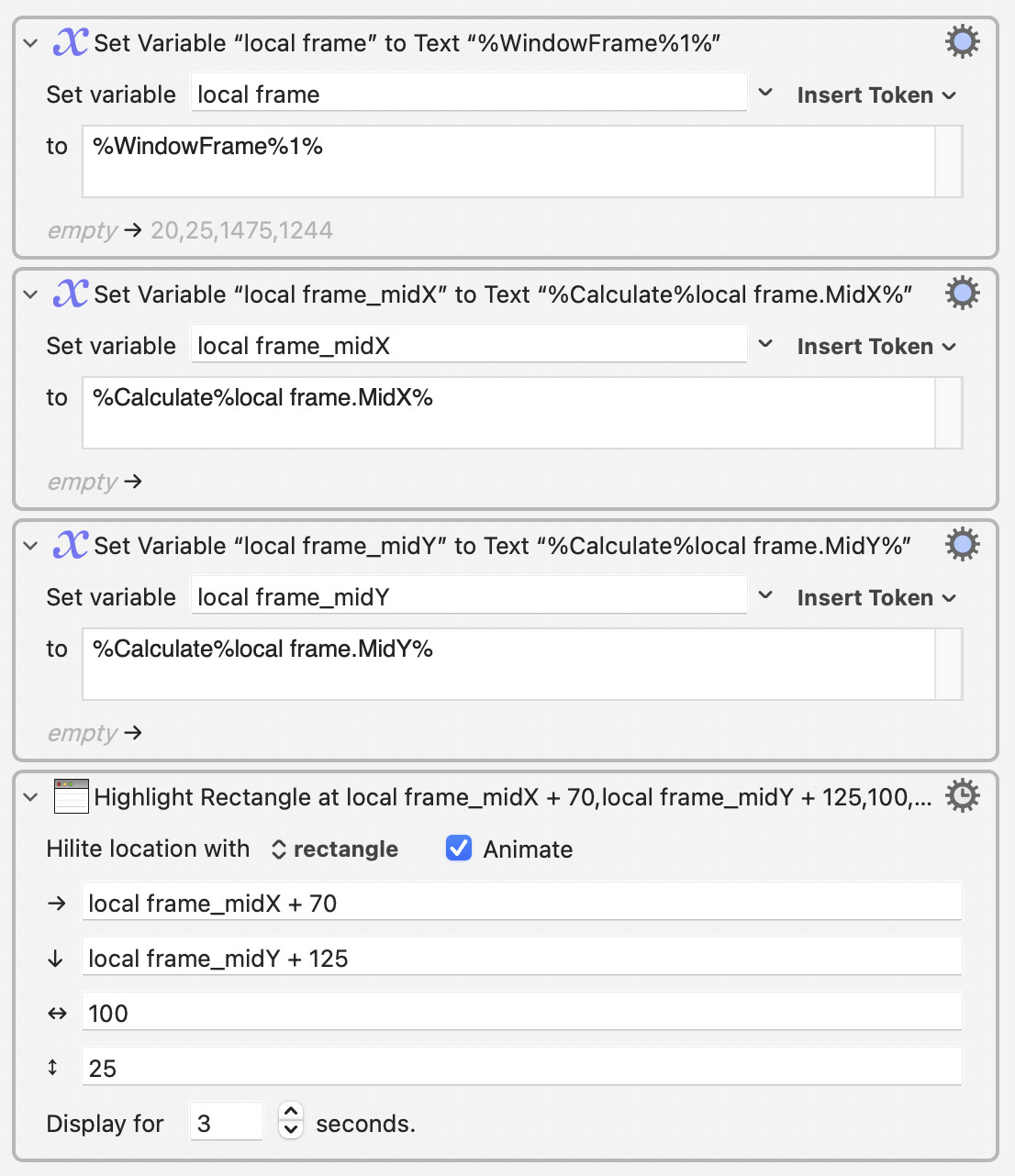
A box is now drawn around “ Audio files” whenever the
 Save/Save as dialog appears.

It’s probably needless to say that, since I started using this macro set of actions, Logic Pro has never presented me with an unexpectedly unchecked setting. Typical!